

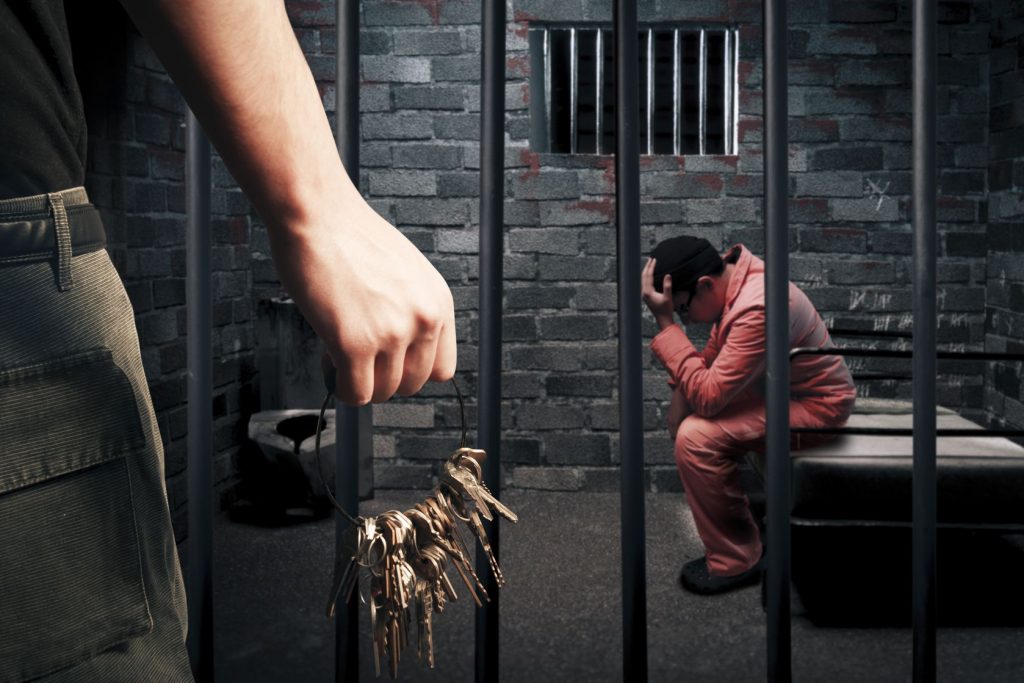
In Oklahoma, Threatening Acts of Violence is a crime that can cost you your freedom. Being accused of making threats can feel confusing and intimidating—especially when no physical violence occurred. Oklahoma law takes threats seriously, and prosecutors often file charges even when the alleged threat was made impulsively or during a heated argument.
This article explains how Oklahoma defines threatening acts of violence, what the State must prove, the penalties involved, and the defenses commonly raised in these cases.
Oklahoma’s Law on Threatening Acts of Violence – 21 O.S. § 1378
Under 21 O.S. § 1378, it is a crime in Oklahoma to willfully threaten to commit any act of violence, whether the threat is made:
- Verbally,
- In writing,
- Through electronic communication,
- Or by any conduct intended to place another person in fear.
The law is broad and applies to threats directed at individuals, groups, schools, government buildings, or the public at large. Unlike assault—which generally requires an attempt or ability to cause immediate harm—threatening acts of violence focuses on communication of future harm that creates fear or disrupts public order.
What the State Must Prove
To convict someone of threatening acts of violence, the prosecution must show:
- A Willful Threat
The accused must have intentionally made a statement or engaged in conduct expressing an intent to cause harm.
Offhand comments, jokes, or statements taken out of context often become the center of dispute. - A Threat of Violence
The communication must reference a violent act—such as shooting, bombing, attacking, or harming someone. - Purpose or Effect of Causing Fear or Disruption
The threat must be made under circumstances that reasonably cause fear, alarm, evacuation, or disruption of normal activities. - No Actual Injury Necessary
Importantly, the law does not require the person to follow through with the threat.
The crime lies in the threatening communication itself.
Examples of Conduct That May Lead to Charges
Threatening acts of violence charges often arise from:
- Angry social media posts suggesting harm
- Text messages during domestic disputes
- Statements made during school conflicts or workplace arguments
- Threats directed at public institutions
- Comments overheard and reported to law enforcement
- Situations where the alleged victim misunderstood or exaggerated the context
Many of these cases involve miscommunication, emotional outbursts, or speech protected by the First Amendment. A thorough legal review is often needed to determine whether the State can actually prove criminal intent.
Penalties for Threatening Acts of Violence in Oklahoma
Threatening acts of violence can be charged as either a misdemeanor or a felony, depending on the target and severity of the threat.
Misdemeanor Consequences May Include:
- Up to 1 year in county jail
- Fines up to $1,000
- Probation, community service, or anger-management requirements
Felony Consequences May Include:
- Up to 10 years in the Oklahoma Department of Corrections
- Significant fines
- A permanent felony record impacting employment, gun rights, and housing
Threats involving schools, public institutions, or mass-violence scenarios almost always result in felony charges.
Common Defenses to Threatening Acts of Violence
Every case is unique, but common defenses include:
1. Lack of Intent
The accused did not make the statement with the purpose of threatening harm. Sometimes people misunderstand what someone said to them. Simple arguments and misunderstandings are not threatening acts of violence.
2. Protected Free Speech
Rude, offensive, or hyperbolic statements—while impolite—may still be protected by the First Amendment if they do not convey a true intent to commit violence. It’s the intent or purpose to threaten harm that’s a key element of this kind of crime.
3. No Reasonable Fear
The circumstances did not reasonably place a person in fear of harm. The key to this element is how a reasonable person would understand the statement. Would it create fear in a reasonable person? If not the state might not have a case.
4. Misunderstanding or Misinterpretation
The alleged victim may have misheard, misinterpreted, or exaggerated the statement.
5. Insufficient Evidence or Anonymous Communication
Digital threats often lack proof of who actually made the communication.
A skilled defense attorney evaluates whether the State can meet every required element and challenges the evidence accordingly.
Why These Cases Are Often Overcharged
Prosecutors frequently file threatening-violence charges out of caution, especially when schools or workplaces are involved. Many of these cases ultimately lack:
- Actual intent
- Corroborating evidence
- Context supporting a true threat
A well-prepared defense can often reduce or dismiss charges by highlighting constitutional protections and deficiencies in the State’s case.
Charge for Threatening Acts of Violence? We Can Help.
These cases carry serious consequences, but the law requires the prosecution to prove far more than simply harsh or angry words. If you or someone you know has been accused of making threats of violence, our criminal defense team can evaluate the allegations, protect your rights, and fight for you. For a free consultation with a criminal defense attorney in Tulsa, Oklahoma, call the Kania Law Office at 918.743.2233. You can also follow this link to ask a free online legal question.



Tulsa's Local Criminal Defense Lawyers
 Are you looking for Tulsa attorneys who will fight aggressively for you? Our team of criminal defense attorneys have the experience needed in Oklahoma law to secure the outcome you deserve.
Call us today for a free consultation 918-743-2233 or contact us online.